
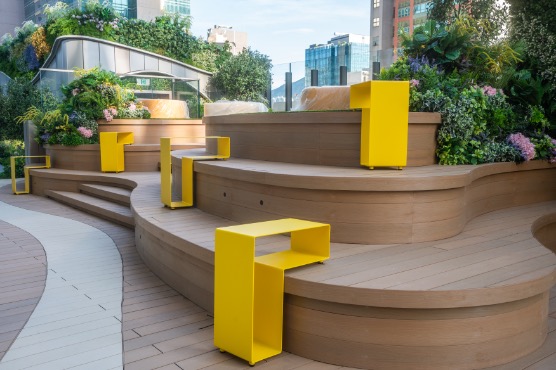
Are you looking for outdoor flooring that will stand the test of time without giving up a carefully designed aesthetic? Would you like to enjoy an elegant, practical and easy-to-maintain terrace? Composite flooring has become a highly valued alternative for outdoor spaces, especially in homes, hotels, pool areas, gardens and architectural projects where a balance between design, durability and functionality is sought.
This type of outdoor decking combines natural fibres and technical materials to offer a stable, resistant and comfortable surface. Although it does not replace the unique beauty of natural wood, it does respond very well to those who need outdoor flooring with lower maintenance and good performance against humidity, sun exposure and daily use.
What is composite flooring?
Composite flooring is made from a mixture of fibres, polymers and other components that seek to reproduce the appearance of wood, but with a more technical composition. In Spain, it is also known as technological decking, synthetic outdoor flooring or WPC flooring, although each manufacturer may work with different formulations and finishes.
Its main advantage is that it is designed to withstand demanding conditions. That is why it is frequently installed on terraces, porches, gardens, walkways, swimming pools and contract spaces. Compared with traditional decking, it requires less periodic care and maintains a homogeneous appearance for longer.
At specialist companies such as Exterpark, the Exterpark TECH collection brings together composite outdoor decking solutions with finishes focused on resistance, texture and stability.
Advantages of installing composite flooring outdoors
One of the main reasons to choose composite flooring is its ease of maintenance. It usually does not require varnishes, oils or frequent treatments. Periodic cleaning with water and suitable products is enough to keep it in good condition.
It also stands out for its resistance to humidity. This makes it an interesting option for pool areas, open terraces or spaces close to the garden. In addition, many current solutions incorporate anti-slip surfaces, a key aspect when looking for safety in outdoor flooring.
Another important point is dimensional stability. Temperature changes can affect any material, but a good installation system and high-quality technological decking help reduce deformation, movement or visible gaps.
Exterpark Cube: Technology, design and precision for outdoors
Within technological decking solutions, Exterpark Tech Cube stands out as a collection designed for outdoor projects where design and technical performance must go hand in hand. It is a composite floor with a wood-textured surface, developed through a co-extrusion process that improves the outer protection of the plank and helps maintain a carefully finished appearance in exposed spaces.
One of its distinguishing features is its patented asymmetric profile, designed to achieve visually cleaner joints and a continuous finish. This is especially interesting on terraces, pool areas, hotels, restaurants or urban spaces where the flooring must not only be resistant, but also integrate with a demanding architectural aesthetic.
In addition, Exterpark Cube is available in different tones, such as Ipe, Teka, Greige, Sand, Cream, Snow or Silver, making it possible to adapt the flooring to the style of each project. Warm colours fit very well in Mediterranean or natural environments, while lighter and more neutral finishes bring brightness to contemporary terraces.
This collection has also been used in renowned international projects. One example is The Millennity in Hong Kong, where Cube Sand and Cream tones were combined to create a bright, contemporary and elegant outdoor finish.
Another example is the Co-Working Green Plaza project, which shows how composite flooring can work in open professional spaces where foot traffic, aesthetics and durability are key factors.
Composite or natural wood: Which option is more suitable?
The choice between composite and natural wood depends on the use, the style of the project and the level of maintenance you are willing to assume. Wood provides a warmth that is difficult to match. Its grain, tones and nuances create an organic feeling that fits very well in high-end projects.
For its part, composite flooring offers a more practical solution for those who prioritize resistance, aesthetic consistency and low maintenance. It does not have the same natural depth as noble wood, but it can offer very carefully designed finishes that are pleasant to the touch.
For those who wish to explore natural options, the Exterpark WOOD collection brings together outdoor wood decking with specific fixing systems. In contrast, if you are looking for a sustainable high-density alternative, Exterpark BAMBOO can also be considered, a natural option for domestic and intensive use.
Technical aspects you should check before choosing
Before installing outdoor flooring, it is worth analysing several factors. The first is the location. A covered terrace is not the same as a pool area exposed to the sun for many hours. Orientation, humidity and ventilation influence the behaviour of the material.
It is also important to review the installation system. A good substructure, correct spacing between planks and suitable fixing are essential to avoid future problems. Even the best material can lose performance if it is installed without technical criteria.
Another key aspect is the surface finish. In wet areas, it is advisable to prioritize textures with good grip. In intensive-use spaces, such as restaurants, hotels or common areas, resistance to wear, stains and frequent foot traffic must be assessed.
Exterpark and the importance of choosing specialists
In a flooring project, the experience of the manufacturer and installer is as important as the product itself. Exterpark, as a company dedicated to the manufacture of wood flooring, understands that each space requires a solution adapted to the use, design and technical conditions of the environment.
Choosing composite flooring, outdoor wood or technical bamboo should not be based only on colour or price. It is necessary to assess the quality of the material, the guarantee, the installation system, maintenance and aesthetic coherence with the project.
With specialized advice, it is easier to avoid common mistakes: Choosing a material that is not suitable for sun exposure, installing without sufficient ventilation or failing to allow for the expansion typical of outdoor flooring. Visit us!
FAQs about composite flooring
Is composite flooring suitable for outdoor terraces?
Yes, composite flooring is a very suitable option for outdoor terraces because it is designed to resist humidity, temperature changes and continuous use. Its technical composition helps reduce maintenance compared with other floors that require periodic treatments. It also offers an aesthetic close to wood, but with greater visual stability over time. To achieve a good result, it is essential to choose quality decking, check the level of sun exposure and carry out correct installation. The substructure, ventilation and spacing between planks directly influence the durability of the flooring.
What maintenance does composite flooring require?
The maintenance of composite flooring is usually simple. Normally, it is enough to remove leaves, dust or surface dirt and clean with water and neutral soap when necessary. In the case of specific stains, it is advisable to act quickly to prevent them from adhering to the finish. It usually does not require oils, varnishes or sanding, which reduces the cost and time needed for upkeep. Even so, each manufacturer may recommend specific guidelines depending on the composition of the material. It is also advisable to avoid abrasive products or tools that are too aggressive, as they could damage the texture or alter the surface appearance of the decking.
Is composite flooring better than natural wood?
It is not a matter of one option always being better than the other, but of choosing according to the needs of the project. Natural wood offers authentic beauty, with grain, nuances and a warmth that is very difficult to reproduce. Composite flooring, on the other hand, stands out for its low maintenance, resistance and aesthetic regularity. For a home where the naturalness of the material is highly valued, wood may be ideal. For a very exposed terrace, a pool area or an intensive-use space, composite may be more practical. The decision should balance aesthetics, use and maintenance.
Does composite flooring get very hot in the sun?
As with many outdoor floors, composite flooring can heat up if it receives direct sunlight for many hours, especially in dark tones. The surface temperature will depend on the colour, the composition of the material, the orientation of the terrace and the ventilation of the space. In very sunny areas, it is usually advisable to choose medium or light tones, as they absorb less heat than dark finishes. It also helps to combine the flooring with shade, pergolas, awnings or vegetation. Before choosing, it is worth requesting technical advice and assessing real samples in conditions similar to the project.
How long does composite flooring last?
The lifespan of composite flooring depends on product quality, installation, use and maintenance. Well-manufactured and properly installed technological decking can offer a long service life in outdoor spaces, even in areas exposed to humidity or frequent foot traffic. However, not all composites are the same. Density, surface protection, fixing system and material stability have a major influence on performance. To extend its useful life, it is important to clean the flooring regularly, avoid accumulations of water or dirt and always follow the manufacturer’s recommendations.
