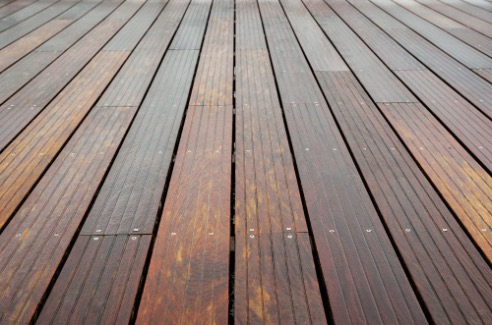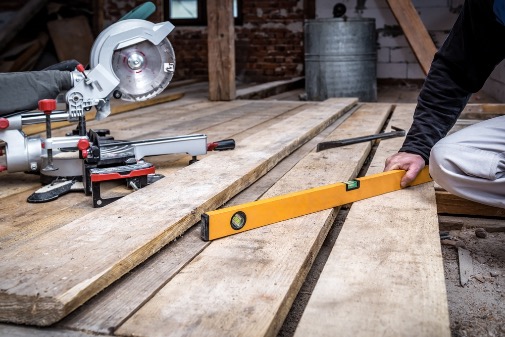
Do you have a wooden floor with years of history and worry about losing its essence when renovating it? Knowing how to level an old wooden floor without compromising its aesthetics is one of the most important concerns for those who value the natural beauty of wood and the warmth of spaces with personality.
At Yvyra, specialists in high-quality wooden flooring, we understand that every plank tells a story. That’s why, when it comes to restoring, leveling, or recovering an old floor, the goal is not only to achieve a uniform surface, but also to preserve the soul of the material.
Below, we explain the best techniques for leveling a wooden floor, the most common mistakes, and how to achieve a result that respects the authenticity of the original flooring.
Methods and techniques for leveling an old wooden floor
There are several solutions depending on the degree of unevenness and the type of original installation. Below are the most commonly used methods by industry professionals.
1. Professional sanding for minor irregularities
When the unevenness does not exceed 2–3 millimeters, full sanding of the floor may be sufficient. This process evens out the surface, removes imperfections, and prepares the wood for a new finish.
The key is to use professional machinery with abrasives of different grits, working progressively to avoid damaging the fibers. Once leveled, a varnish or natural oil can be applied to enhance the original color and texture.
2. Leveling with filler or specific compounds
If the height differences are more pronounced, leveling the wooden floor with self-leveling filler or specific products is an excellent option. These materials, formulated for wood, allow gaps to be filled and deformations corrected without compromising the flexibility of the base.
It is important to choose a filler compatible with the type of wood and to apply a primer beforehand to ensure proper adhesion. This method is ideal when planning to install a new floating or glued parquet floor over the existing surface.
3. Substructure inspection and replacement of joists
In old floors installed over joists, the issue often lies in the substructure. In such cases, it may be necessary to remove the boards, inspect the structure, and adjust the support points. If there are areas of subsidence, these can be corrected by adding shims, filling with leveling material, or replacing damaged joists.
This process is more complex, but it guarantees long-lasting leveling and a solid underfoot feel. It also allows for the inclusion of thermal or acoustic insulation, improving comfort without altering the external appearance of the floor.
How to preserve the original character of the floor
The key to restoring an old wooden floor without losing its charm lies in preserving its distinctive elements: grain patterns, natural color variations, knots, and the patina created over time.
After leveling, it is recommended to apply natural finishes that respect the texture while providing protection. Ecological oils and waxes are excellent allies for preserving that aged appearance, adding shine and resistance without creating an artificial layer.
At Yvyra, our wood collections offer great inspiration for those seeking to combine tradition and modernity.
- The Millesime collection stands out for its artisanal finishes and noble woods that evoke the elegance of classic flooring.
- Meanwhile, 10AK Único offers a contemporary aesthetic with wide formats and treatments that enhance the natural beauty of wood—perfect for renovations that seek authenticity with a modern touch.
Both options demonstrate that it is possible to renovate an old floor while maintaining the balance between historical character and modern functionality.
Common mistakes when attempting to level old parquet flooring
Even with the best intentions, certain mistakes can compromise the final result. Some of the most common include:
- Using unsuitable materials, such as cement-based mortars or fillers that do not respect the flexibility of wood.
- Excessively removing the surface layer during sanding, reducing the usable thickness of the boards.
- Ignoring the root cause of the problem and applying temporary solutions that do not address the source of the unevenness.
- Failing to leave expansion gaps at the edges, which can lead to new deformations with changes in temperature or humidity.
Turning to professionals with experience in wooden flooring is the best way to avoid these issues and extend the lifespan of the floor.
FAQs about leveling an old wooden floor
Can I level a wooden floor without lifting it?
Yes, if the irregularities are minor. In such cases, professional sanding or surface leveling with a compatible filler may be sufficient.
Is it advisable to use self-leveling filler on wood?
Only if it is a product specifically designed for wood. Cement-based fillers can damage the subfloor due to their rigidity and lack of elasticity.
How much does it cost to level an old parquet floor?
It depends on the condition, the type of installation, and the desired finish. In general, it ranges between €20 and €60 per m², although each project requires a specific assessment.
Can a severely deformed floor be restored?
Yes, but it may involve lifting the boards and inspecting the substructure. In some cases, it is advisable to combine restoration with partial replacement of damaged pieces.
At Yvyra, we offer you the expertise of decades spent manufacturing and restoring high-end wooden flooring. If you’re looking for inspiration or materials for your restoration project, discover our Millesime and 10AK Único collections—where tradition and design come together to give new life to floors with history. Visit us today!