Have you ever thought about how flooring influences the aesthetics of a garden, terrace or patio? Very often we focus on furniture, vegetation or lighting, but forget that the pavement is one of the elements that creates the greatest visual impact. A well-planned outdoor flooring design can completely transform a space and turn it into a functional, elegant and durable area.
In recent years, outdoor architecture has evolved toward solutions that are more natural, sustainable and resistant. Homeowners and interior design professionals are looking for materials capable of withstanding outdoor conditions without sacrificing style.
For this reason, choosing the right flooring for exterior spaces has become a key decision. At Yvyra, we analyze current trends, the most commonly used materials and the key elements to achieve an outdoor floor that combines aesthetics, durability and functionality.
The importance of flooring in outdoor space design
Flooring does not only serve a practical function; it also defines the character of the environment. A well-chosen floor creates visual continuity between the interior and exterior of the home, while also improving comfort and safety for those using the space.
When talking about outdoor flooring design, it is essential to consider factors such as resistance to wear, the ability to withstand temperature changes, sun exposure and humidity. These elements directly influence the durability of the material.
In addition, the pavement must integrate with the architectural style of the surroundings. A modern garden does not require the same flooring as a traditional patio or rustic courtyards with natural vegetation.
Outdoor flooring design trends
Current trends focus on materials that combine natural aesthetics with high technical performance. Homeowners are looking for durable surfaces that maintain their appearance over time. Among the most notable trends are:
Natural materials and organic textures
Nature-inspired materials continue to play a leading role. Natural stone, for example, is still widely used in gardens and terraces due to its authentic appearance and great resistance. However, many modern projects combine natural aesthetics with advanced technologies that improve the material’s performance against weather conditions.
Wood-effect flooring
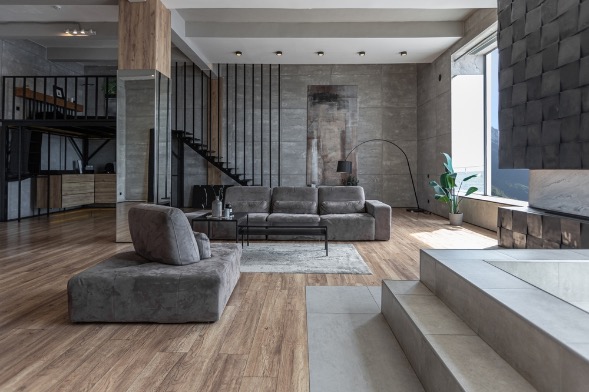
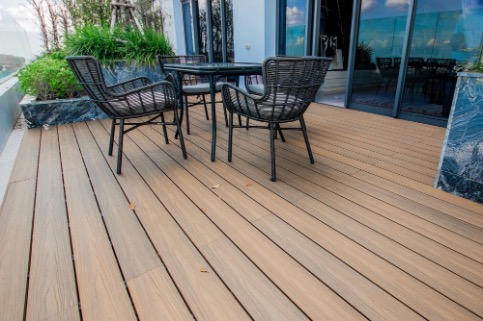
The wood effect is one of the most important trends in outdoor architecture. This finish allows you to enjoy the warm aesthetics of wood while maintaining high standards of resistance. Floors that replicate the appearance of natural wood bring elegance and visual continuity with the interior of the home.
Industrial and contemporary finishes
Another strong trend is the use of cement-effect flooring or minimalist finishes. These surfaces work particularly well in contemporary architecture projects and urban terraces. At the same time, porcelain stoneware outdoor flooring has become a highly valued technical solution, as it offers excellent durability and resistance to humidity.
The role of wood in outdoor design
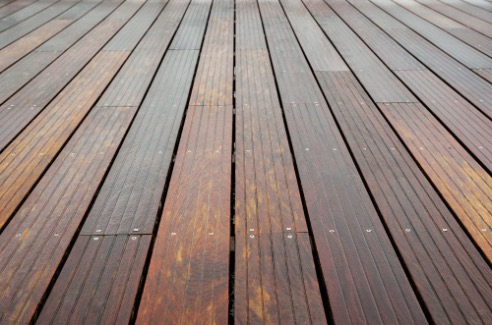
Among all the available options, wood remains one of the most appreciated materials for outdoor flooring design. Its natural appearance and ability to integrate into different architectural styles make it a very versatile choice.
Wood flooring provides visual warmth, walking comfort and an elegant aesthetic that is difficult to replicate with other materials.
Specialized companies such as Yvyra, dedicated to the manufacture of high-quality wooden flooring, offer solutions specifically designed for contemporary architectural projects. Their proposals stand out for combining design, durability and sustainability.
Among their outdoor solutions, the Exterpark collection represents an advanced option for exterior pavements. This system allows the creation of continuous, elegant and resistant surfaces, ideal for terraces, gardens or pool areas.
In addition, the different options available within Yvyra’s collections offer a wide range of finishes designed to adapt to different architectural styles and design needs. Visit us and choose the one that best suits you.
FAQs about outdoor flooring design
What material is best for outdoor flooring design?
Choosing the right material depends on the use of the space, the climate and the architectural style of the environment. Natural stone, porcelain stoneware for outdoor use and treated wood are among the most commonly used options in outdoor architectural projects. Each material offers different advantages in terms of resistance, maintenance and aesthetics.
For example, wood provides a warm and natural appearance, while porcelain stoneware stands out for its great durability. The most important factor is choosing materials with strong technical performance that can withstand humidity, sunlight and temperature changes.
How does climate affect outdoor flooring design?
Climate is one of the most important factors in outdoor flooring design. Pavements must withstand rain, solar radiation, frost and thermal variations. Temperature changes can cause expansion or contraction in some materials, so it is essential to choose solutions specifically designed for outdoor use.
Treated wood flooring, porcelain stoneware and certain composite materials perform well under these conditions. In addition, it is advisable to choose non-slip surfaces to ensure safety in areas exposed to humidity or near swimming pools.
What are the current trends in outdoor flooring?
Current trends focus on natural materials and finishes inspired by contemporary architecture. Wood-effect flooring continues to be one of the most popular options due to its warm and elegant aesthetic. Cement-effect surfaces are also widely used in modern terraces and urban spaces.
In more traditional projects, natural stone remains a highly valued choice. The key to current trends is combining design and functionality, using materials that provide both attractive aesthetics and strong technical performance for outdoor use.
Why is wood a popular option for outdoor spaces?
Wood is a natural material that brings warmth and elegance to any outdoor environment. Its texture and organic appearance help create welcoming atmospheres in gardens, terraces or rustic patios. In addition, technological advances have made it possible to develop installation systems and treatments that improve its resistance to weather and wear.
When quality solutions are used — such as those developed by specialized manufacturers — wood can offer excellent durability and stability. For this reason, it remains one of the preferred choices in outdoor flooring design projects.