
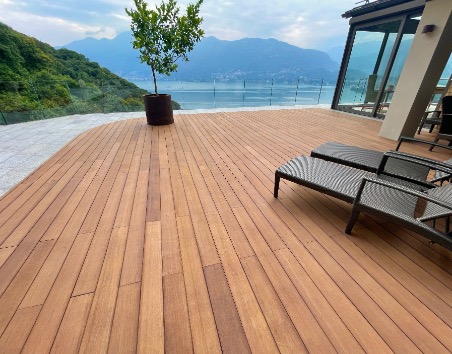
Can a natural material combine beauty, resistance and sustainability in a single floor? Is it possible to choose warm, elegant flooring prepared for daily use without giving up a responsible approach?
When talking about the benefits of bamboo decking, it is important to clarify first that bamboo is not traditional wood, but a fast-growing grass which, after the right technical process, can become high-performance flooring.
In the field of wood flooring, bamboo has become a highly valued alternative among architects, interior designers and homeowners looking for an aesthetic, resistant solution with good stability. At Yvyra, a company specializing in indoor and outdoor wood flooring, this type of material fits especially well in projects where a balance between design, functionality and respect for the environment is sought.
What is bamboo wood applied to flooring?
When we talk about bamboo wood in flooring, we refer to pieces made from bamboo fibres that are pressed and treated to achieve high density. This process makes it possible to obtain boards suitable for use as decking, technical flooring or outdoor flooring, depending on the system and finish chosen.
Its natural appearance, soft grain and pleasant feel make it a very interesting option for those who want a warm floor with a contemporary look. In addition, within the Exterpark collections, bamboo holds a prominent place thanks to its technical and sustainable approach, especially in solutions designed for outdoor use.
Bamboo flooring benefits
One of the major benefits of bamboo is its rapid growth. Unlike many forest species, bamboo can regenerate in less time, making it an interesting raw material from an environmental point of view. This characteristic, together with advanced manufacturing processes, makes it possible to create floors with good resistance and a lower impact on natural resources.
Another important point is its hardness. Properly processed bamboo decking can offer excellent performance against foot traffic, temperature changes and continuous use. That is why it is used both in homes and in commercial spaces, terraces, gardens or pool areas, provided that the product is designed for that environment.
It also stands out for its dimensional stability. In outdoor flooring, this aspect is key, since the floor must withstand humidity, sun exposure and climate variations. The Exterpark Bamboo collection is precisely aimed at those looking for natural, dense decking suitable for demanding uses.
Aesthetic advantages of bamboo flooring
Beyond the technical side, bamboo provides a clean, elegant and contemporary aesthetic. Its tones can range from lighter natural finishes to carbonized versions with a more intense appearance. This allows it to adapt to Mediterranean, minimalist, Nordic styles or even outdoor projects with a more sophisticated feel.
Who does not want a floor that adds warmth without overloading the space? Bamboo achieves that balance because it offers a natural presence without being excessively rustic. On terraces, porches or chill-out areas, it helps create comfortable and visually ordered environments.
In addition, it combines well with stone, ceramic, metal, glass and vegetation. That is why it is a versatile option for projects where the flooring must integrate with the architecture rather than compete with it.
Bamboo, natural wood and composite: Which option should you choose?
The choice between bamboo, natural wood or technological decking depends on use, the desired aesthetic and the acceptable level of maintenance. The Exterpark Wood collection is ideal for those seeking the nobility of natural wood species, with unique texture, colour and grain. It is a highly valued option in projects where the authenticity of the material is a priority.
For its part, bamboo is interesting when a natural, resistant material with a sustainable approach is desired. It is a balanced alternative for those who want outdoor decking with character, but also with good technical performance.
In contrast, the Exterpark Tech collection responds better to those looking for technological flooring with low maintenance and high resistance to stains or scratches. It does not replace natural wood in terms of feel, but it can be a practical solution for certain spaces.
When is it worth choosing bamboo?
Bamboo is worthwhile when you are looking for a natural, resistant floor with a modern image. It is especially recommended for projects where an alternative to tropical wood is desired, without losing warmth or character. It also fits well in homes, hotels, restaurants, private terraces and frequently used outdoor spaces.
If the goal is to create a comfortable, durable environment with a carefully designed aesthetic, bamboo can be a very sound choice. At Yvyra, experience in flooring and decking makes it possible to assess each project according to its real needs, avoiding decisions based solely on trends. Visit us!
FAQs about bamboo wood and its benefits
What are the main benefits of bamboo wood?
The main benefits of bamboo wood are its resistance, stability, natural aesthetic and sustainable approach. Although technically bamboo is not conventional wood, when transformed into flooring it offers very interesting performance for indoor and outdoor floors. Its rapid growth makes it a renewable raw material, while its industrial treatment makes it possible to obtain dense and durable boards. In addition, it provides visual warmth, combines with many decorative styles and can be an attractive alternative to other natural decking options when a balance between design, functionality and environmental responsibility is sought.
Is bamboo decking suitable for outdoor use?
Yes, bamboo decking can be suitable for outdoor use as long as it is specifically designed for that purpose. Not all bamboo products offer the same performance, so it is essential to choose a collection prepared to withstand humidity, solar radiation, temperature changes and frequent foot traffic. On terraces, gardens, porches or pool areas, treated bamboo can offer good technical performance and a very warm aesthetic. It is also important for the installation to be correct, with adequate ventilation and compatible fixing systems. A good product installed poorly can lose part of its performance.
What is the difference between bamboo and natural wood?
The main difference is their origin. Natural wood comes from trees, while bamboo is a fast-growing grass. However, both materials can be transformed into flooring with a warm and natural appearance. Wood offers unique grains, tones and textures depending on the species, while bamboo usually presents a more uniform and contemporary image. In terms of performance, everything depends on the treatment, density and intended use. To decide between bamboo and wood, it is advisable to assess aesthetics, location, maintenance, budget and the expected long-term behaviour of the floor.
Does bamboo wood require a lot of maintenance?
Bamboo wood does not necessarily require a lot of maintenance, but it does need proper care to preserve its performance. Indoors, regular cleaning, avoiding aggressive products and protecting the floor from knocks or excess humidity is usually enough. Outdoors, maintenance must be more consistent, as the flooring is exposed to sun, rain and temperature changes. Cleaning the surface, avoiding dirt build-up and following the manufacturer’s recommendations helps extend its useful life. The key lies in choosing the right product and respecting its usage instructions.
Is choosing bamboo flooring sustainable?
Choosing bamboo flooring can be a sustainable decision when the product comes from responsible manufacturers and is installed according to appropriate technical criteria. Bamboo grows quickly and can regenerate in less time than many wood species, reducing pressure on certain forest resources. However, real sustainability also depends on the manufacturing process, the treatments applied, transport, durability and maintenance. That is why it is important not to focus only on the material, but to assess the full product lifecycle. A durable, well-installed floor will always be a more responsible choice.
