
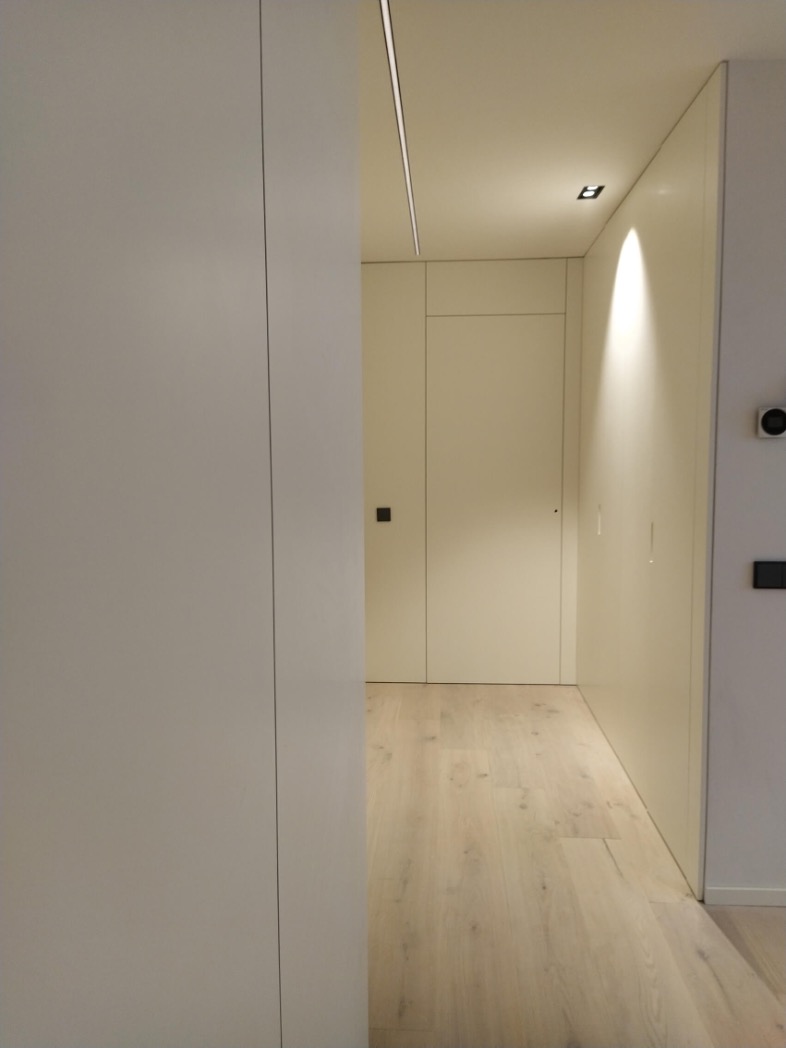
Can a door completely change the perception of a floor? And can wooden flooring make a home feel brighter, more elegant or more welcoming? The answer is yes. Combine wooden doors and floors is not just about choosing two beautiful finishes, but about creating a balanced relationship between colour, texture, grain, light and decorative style.
Combining Wooden Doors and Floors in a Simple Way
In interior design projects, the floor acts as the visual base of the entire room. For this reason, before choosing interior doors, skirting boards or furniture, it is advisable to start with the flooring. In the case of Yvyra, its wooden floor collections make it possible to work with everything from natural and serene styles to spaces with a stronger artisanal character.
The Main Rule: Harmony Before Matching
One of the most common mistakes is trying to make the doors and the floor exactly the same tone. Although this can work in some cases, it is not always the most advisable choice. Wood has natural grain, nuances and variations, so seeking absolute uniformity can create an artificial result.
The most elegant approach is usually to work through harmony. In other words, choosing finishes that share the same colour temperature: warm woods with honey, beige or toasted tones; cool woods with greys, off-whites or muted browns; and natural tones when aiming for timeless décor.
For example, a floor from the Millésime collection can work very well with doors in light wood, off-white or soft lacquered finishes, especially if the goal is to highlight the artisanal texture of the flooring.
Light-Coloured Doors to Create a Greater Sense of Space
When the floor has a strong presence, the most practical choice is to let it become the main feature. What happens if we install flooring with a pronounced texture, aged oak or an artisanal finish and add doors that are too dark? The space can feel heavy, especially if there is little natural light.
In these cases, lacquered doors in white, sand, stone or warm grey are a highly versatile solution. They work especially well with natural oak floors, multi-layer flooring or parquet with an organic appearance. In addition, they help visually enlarge hallways, corridors and bedrooms.
Models such as Priorat, with rustic oak and white UV finish, or Aire from the 1OAK Único collection, are very suitable options for serene interiors where light-coloured doors reinforce brightness.
Elegant Contrast: When to Choose Dark Doors
Contrast can also be an excellent decision if applied with care. A light floor combined with walnut, dark oak, matt black or anthracite doors can add personality and sophistication. However, this formula is best reserved for homes with good lighting, high ceilings or spacious rooms.
The key is to repeat the dark tone in small elements: handles, profiles, lamps, occasional furniture or metallic details. This way, the door does not feel visually isolated.
If a more enveloping atmosphere is desired, finishes such as Somontano, with smoked oak, or Margaux, with double fumé and natural oil, can combine very well with dark wooden doors or deep lacquered finishes.
How to Choose According to the Decorative Style
In Nordic, Mediterranean or Japandi styles, the ideal choice is light woods, smooth doors, clean lines and sand, off-white or soft grey tones. Finishes that provide naturalness without overwhelming the space work especially well here.
In updated classic interiors, herringbone floors, Hungarian point patterns or artisanal textures work beautifully alongside moulded or lacquered doors. For contemporary rustic spaces, woods with knots, visible grain and aged finishes help create an authentic atmosphere.
In more sophisticated projects, the Millésime collection makes it possible to work with floors full of character, ideal for combining with understated doors, carefully selected fittings and an elegant colour palette.
Choosing doors, skirting boards and flooring well is a decision that defines the personality of a home for many years. To successfully combine wooden doors and floors, it is important to observe the light, define the decorative style and work with quality materials. Visit Yvyra and get inspired!
FAQs About Combining Wooden Doors and Floors
Should doors be the same colour as the wooden floor?
Not necessarily. In fact, trying to achieve the exact same colour can be difficult and, in some cases, unnatural. Wood changes depending on the grain, the light and the finish, so it is better to think in terms of visual harmony. If the floor has a warm tone, it is advisable to choose doors that share that same temperature, even if they are lighter or darker. White, cream or soft grey doors work very well with natural oak floors. On the other hand, if a more enveloping result is desired, wooden doors in a complementary tone can be chosen.
Which doors work best with light wooden floors?
Light wooden floors allow for many combinations. For a bright and modern result, lacquered doors in white, ivory or beige are a safe choice. Light wooden doors also work well if the goal is to maintain a natural and relaxed aesthetic. If the objective is to create contrast, doors in walnut, graphite or black tones can be chosen, provided the room has good lighting. In small spaces, it is preferable to avoid excessively strong contrasts. Light floors, especially oak, combine very well with Nordic, Mediterranean and minimalist styles.
What should you do if the wooden floor has a strong grain?
When the floor has a strong grain, knots or texture, the most advisable solution is to balance it with more discreet doors. A smooth, lacquered door or a wooden door with a soft grain allows the flooring to retain its prominence without overwhelming the overall design. It is also important to pay attention to the skirting board, as it can help visually organise the transition between the floor and the wall. If a sophisticated atmosphere is desired, some nuances of the floor can be repeated in furniture or decorative details. This way, the room maintains coherence without requiring all elements to be identical.
Are lacquered doors a good option with wooden floors?
Yes, lacquered doors are one of the most versatile options to combine with wooden floors. They provide visual cleanliness, brightness and a timeless style. The most common are white doors, but lacquered finishes in light grey, sand, taupe or very soft green are also highly elegant. They work especially well when the floor has expressive wood or an artisanal finish. In addition, they make it possible to renovate a home without overloading it visually. To achieve a more refined result, it is advisable to coordinate the colour of the doors with skirting boards, walls and interior carpentry.
How can you avoid the combination looking overloaded?
The best way to avoid an overloaded result is to limit the number of dominant tones. Ideally, one main wood, one colour for doors and skirting boards, and a supporting palette for walls and furniture should be chosen. It also helps to differentiate between main and secondary elements: if the floor has a lot of character, the doors should be more neutral; if the floor is discreet, the doors can have more presence. Natural light, room size and decorative style also play an important role. In decoration, coherence is usually more important than exact matching.
