
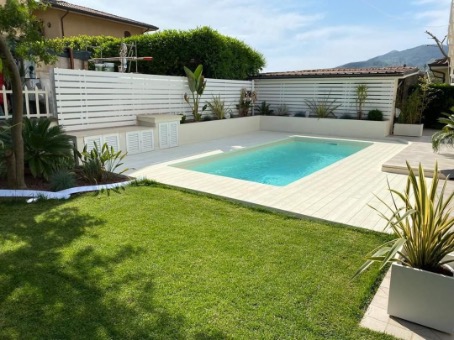
Is there really a single answer to what the best outdoor flooring is? The truth is, no. The right choice depends on multiple factors: how the space will be used, climate conditions, the project design, and even the level of maintenance you’re willing to take on.
However, what is true is that today there are far more advanced solutions than traditional ones, capable of delivering better results in durability, aesthetics, and functionality. At Yvyra, we explain how to identify the best option from a professional and up-to-date perspective.
What truly defines the best outdoor flooring?
When we talk about the best outdoor flooring, we’re not referring only to the material, but to the overall performance of the system. High-quality outdoor flooring must meet several key requirements:
- Structural resistance to continuous use
- Ability to adapt to climate changes
- Safety in wet conditions
- Long-term stability
- Aesthetic integration with the surroundings
Therefore, the best choice will be the one that balances all these factors according to the specific project.
Types of outdoor flooring: Advantages and limitations
To make an informed decision, it’s important to understand the main options available on the market.
Natural stone
A classic and highly resistant option, known for its durability and solid appearance.
Strengths:
- High wear resistance
- Long lifespan
- Robust look
Limitations:
- Can feel visually cold
- Complex installation
- Less comfortable underfoot
Stamped concrete
Widely used outdoors due to its versatility and cost-effectiveness.
Strengths:
- Wide variety of finishes
- Good resistance
- Suitable for large surfaces
Limitations:
- May crack over time
- Lower aesthetic value in design-focused projects
- Less natural feel
Artificial grass
A practical solution for recreational areas.
Strengths:
- Low maintenance
- Quick installation
- Consistent green appearance
Limitations:
- Lacks a truly natural feel
- Can overheat in summer
- Less durable under heavy use
Outdoor decking systems: An increasingly complete solution
In recent years, outdoor decking has evolved significantly. It’s no longer just about placing boards on a surface, but about working with systems designed for high technical performance.
This is where solutions like Exterpark, distributed by Yvyra, stand out. These systems integrate:
- Materials specifically selected for outdoor use
- Structures that promote ventilation
- Designs that optimize water drainage
- Precise installation with no visible fixings
This approach delivers a much more durable and stable result than conventional solutions.
Why technical solutions are gaining importance
If we analyze what can be considered the best outdoor flooring, more and more professionals agree that the key factor is not the material itself, but the complete system. Technical solutions stand out for:
- Long-term stability: They reduce issues such as movement, deformation, or premature deterioration.
- Better water performance: They incorporate systems that prevent water accumulation—one of the main challenges in outdoor environments.
- Refined aesthetics: They eliminate visible elements like screws, offering cleaner finishes.
- Greater adaptability: They suit a wide range of projects, from private terraces to large commercial spaces.
Keys to making the right choice
So, how do you know what the best outdoor flooring is for your specific case? Here are some practical recommendations:
- Analyze how the space will actually be used (intensive or occasional)
- Consider exposure to sun and moisture
- Prioritize systems with effective drainage
- Evaluate maintenance in the medium and long term
- Rely on proven technical solutions
The key is to make an informed decision—not an impulsive one.
A modern approach: Design + technology
Today’s outdoor projects demand more than just durability. They aim to combine aesthetics, comfort, and long-term performance. That’s why solutions like those developed by Yvyra, based on advanced decking systems, allow you to create spaces that not only look good but also function properly over time.
This approach—integrating design and technology—is redefining the concept of the best outdoor flooring.
Outdoor spaces that truly perform
Choosing the right flooring is a strategic decision. It’s not just about how the space looks on day one, but how it evolves with use and environmental conditions. Opting for technical systems, quality materials, and a professional approach ensures a durable, safe, and visually appealing result.
If you’re looking for the best outdoor flooring, the answer isn’t a single option—it’s choosing the solution that best fits your project and its real demands. Contact us!
Frequently asked questions about the best outdoor flooring
What is the best outdoor flooring for high-humidity areas?
In areas with constant humidity, frequent rain, or proximity to pools, the best outdoor flooring should not be chosen based only on appearance. The most important factors are proper drainage, structural stability, and a safe walking surface. It’s advisable to choose systems specifically designed for outdoor use that prevent water accumulation and reduce slipping risks. Durability and resistance to temperature changes are also key considerations.
Which outdoor flooring requires the least maintenance?
The best outdoor flooring is not always the one requiring the least maintenance, but the one that balances aesthetics, durability, and ease of care. That said, there are technical solutions that significantly reduce maintenance compared to traditional options. Ideally, choose a system that is easy to clean, does not retain dirt, and remains stable over time. Lower maintenance also means greater convenience and reduced long-term costs.
Is natural flooring better than a technical solution?
There is no single answer for all projects. Natural materials may stand out for their beauty and warmth, while technical solutions offer advantages in installation, stability, and moisture performance. When choosing the best outdoor flooring, the smartest approach is to analyze the real use of the space and the project’s requirements. Often, the best option is not to choose between them, but to opt for systems that combine design, functionality, and reliable technical performance.
How does installation affect the final result?
Installation plays a much bigger role than it may seem. Even a high-quality material can perform poorly if installed incorrectly. When discussing the best outdoor flooring, it’s also essential to consider how it is installed, how it drains, and how it behaves over time. Professional installation improves stability, reduces unwanted movement, and enhances water drainage. It also helps maintain the flooring’s appearance for longer. In outdoor projects, both the product and the execution are equally important.
