
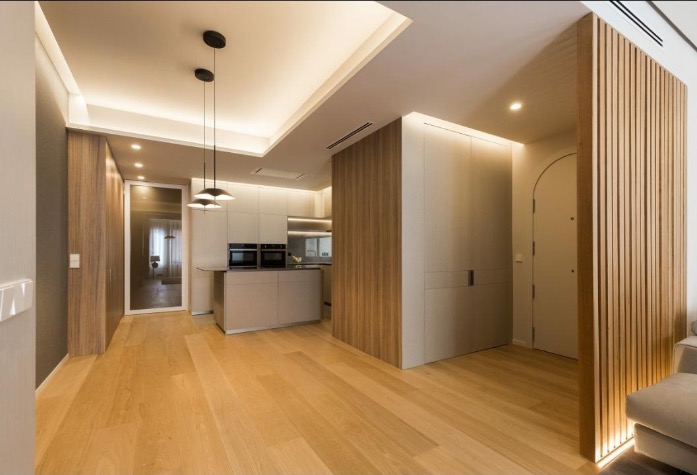
Is it possible to enjoy a modern, functional and elegant kitchen without giving up the warmth of wood? Can natural flooring withstand the daily pace of a room where there is humidity, foot traffic, temperature changes and frequent cleaning? The answer is yes, provided that you choose a quality floor, with the right finish and professional installation.
Modern kitchens with wooden floors have become one of the most valued trends in interior design because they offer a balance between aesthetics, comfort and durability. Compared to colder materials such as porcelain tiles or microcement, wood creates an immediate sense of home, softens the straight lines of contemporary furniture and makes it possible to design warmer, more welcoming spaces.
In an open-plan kitchen connected to the living room, for example, wooden flooring helps unify the different areas. In independent kitchens, it adds personality and elevates the design without overloading the décor. The key is to select flooring prepared for everyday use and adapted to the lifestyle of each home. To achieve this, at Yvyra we offer multiple options.
Why Choose Wooden Flooring in a Modern Kitchen
The kitchen is no longer just a work area. Today, it is a social and family space, often integrated with the dining room or living room. That is why the flooring plays a leading role: it must be resistant, easy to maintain and consistent with the overall design of the house.
A well-chosen wooden floor offers three main advantages. Firstly, it provides visual warmth, something especially useful in kitchens with white, black, grey or minimalist furniture. Secondly, it improves aesthetic continuity when the same flooring is installed in several rooms. And thirdly, it offers a more comfortable step than other hard materials.
Collections such as Yvyra’s Ynova are an interesting option for projects seeking flooring with artisanal character, carefully crafted finishes and a timeless aesthetic. Within this collection, variants such as Céfiro make it possible to work with European oak, aged treatments and finishes that fit very well in modern kitchens with natural inspiration.
Design: How to Combine Wood, Furniture and Light
In modern kitchens with wooden floors, the design works best when there is harmony between the flooring, the furniture and the lighting. If the kitchen is small or has little natural light, light tones help visually enlarge the space. Natural oaks, whitewashed finishes or invisible varnishes are perfect for creating bright, clean and serene environments.
In spacious or open-plan kitchens, you can opt for woods with more presence, pronounced grain or deeper tones. These finishes add sophistication and combine very well with stone worktops, black taps, walnut furniture, lacquered fronts or central islands.
Resistance: What a Wooden Kitchen Floor Should Have
One of the most common doubts is whether wood can withstand the daily use of a kitchen. The answer depends on the type of wood, the construction system, the surface treatment and maintenance. Not all flooring is the same, and in intensive-use areas it is advisable to choose products with high dimensional stability.
European oak is one of the most widely used species thanks to its balance between hardness, beauty and versatility. In addition, quality multi-layer floors help reduce movement caused by changes in humidity or temperature. This is especially important in kitchens with underfloor heating or direct connection to outdoor areas.
Finishes also make a difference. An invisible varnish, UV oil or suitable protective treatment helps preserve the natural texture of the wood without sacrificing resistance. In this sense, variants with brushed natural oak and invisible varnish, or with a herringbone finish, offer a refined and contemporary aesthetic.
Maintenance of a Kitchen with Wooden Flooring
Does it require a lot of care? Not necessarily. Maintaining wooden flooring in a kitchen is based on prevention and proper cleaning. The most important thing is to avoid water accumulation, clean stains as soon as possible and use specific products for wood.
It is also advisable to place protectors on table and chair legs, use discreet mats in sink areas if extra protection is desired, and ventilate the room properly. With these simple gestures, the flooring retains its beauty for longer.
In a modern kitchen, wood should not be understood as a delicate material, but as a natural solution that requires responsible use. When the product is well manufactured, installed and maintained, it offers excellent durability.
Modern Kitchens with Wooden Floors and Natural Style
The rise of noble materials has led many projects to opt for warmer and less impersonal kitchens. Wood combines with Nordic, Mediterranean, Japandi, contemporary rustic and even industrial styles.
For a serene atmosphere, soft oak tones are a safe choice. For a more exclusive result, herringbone patterns, wide planks or aged finishes add character without overwhelming the space.
In this way, the Ynova collection fits especially well in homes where elegant flooring with history and texture is desired, and is ideal for kitchens. Visit Yvyra and choose the one you like best!
FAQs About Modern Kitchens with Wooden Floors
Is it advisable to install wooden flooring in a kitchen?
Yes, installing wooden flooring in a kitchen is advisable as long as you choose flooring suitable for daily-use areas. The kitchen is a room with foot traffic, occasional humidity and frequent cleaning, so it is best to opt for quality wood, protective treatments and professional installation. Multi-layer oak floors, for example, offer good stability and resistance. In addition, wood provides a warmth that is difficult to achieve with other materials. The key is to avoid standing water, clean with appropriate products and follow the manufacturer’s instructions to preserve the finish for years.
What type of wood works best in modern kitchens?
European oak is one of the most widely used options in modern kitchens due to its resistance, stability and natural beauty. Its balanced grain allows it to be integrated into both minimalist designs and more classic or sophisticated environments. It also accepts different finishes: brushed, aged, oiled, invisible varnish or fumé tones. This makes it easier to adapt the flooring to the style of the furniture and worktop. In high-quality projects, collections such as Yvyra’s Ynova make it possible to work with oak variants designed to provide design, durability and an aesthetic consistent with contemporary homes.
How can you prevent humidity from damaging wooden flooring?
To prevent humidity from damaging wooden flooring, the most important thing is prevention. Water should not be left to accumulate on the surface, especially near the sink, dishwasher or refrigerator. If liquid is spilled, it should be dried as soon as possible with a soft cloth. It is also advisable to maintain proper ventilation and use specific cleaning products for wood, avoiding aggressive detergents or excess water. Good installation, with well-resolved joints and a quality protective finish, helps improve the flooring’s performance against the usual humidity of a kitchen.
What colour wooden floor should you choose for a modern kitchen?
The choice of colour depends on the size of the kitchen, natural light and decorative style. In small or poorly lit kitchens, light tones of natural oak, whitewashed finishes or invisible varnish help create a sense of spaciousness. In large, open kitchens or those with neutral furniture, more intense, aged or higher-contrast finishes can be chosen. Medium tones are very versatile because they combine with white, black, grey, natural stone and steel. The important thing is to seek balance: the floor should complement the design, not compete with the other elements.
What maintenance does a modern kitchen with wooden flooring need?
A modern kitchen with wooden flooring requires simple but consistent maintenance. Ideally, dust should be removed with a soft mop or a vacuum cleaner with a suitable brush, and the floor should be cleaned with specific products for wooden flooring. It is not recommended to mop with too much water or use bleach, ammonia or abrasive cleaners. It is also advisable to protect the most heavily used areas, periodically check the condition of the finish and follow the manufacturer’s recommendations. With this care, the floor can maintain its natural appearance for a long time, even in a demanding room such as the kitchen.
